
The short answer
Grinding usually means metal-on-metal wear in the rollers, bearings, or opener gear. Squealing almost always points to dry or worn rollers and hinges that just need lubrication or replacement. Popping or banging is most often a spring problem or a door that's out of balance. Rattling is typically loose hardware or worn-out rollers rattling in the track. None of these noises are normal, and none of them get better on their own — but the fix is usually simple if you catch it early.
Grinding
What it sounds like: a harsh, mechanical scraping, often rhythmic, that gets louder as the door moves. Sometimes paired with the door moving in jerks instead of a smooth glide.
A technician checks these in order:
- Rollers: steel rollers with worn bearings grind as they turn. This is the most common cause, especially on doors over 8-10 years old. Fix: replace the rollers, usually a full set, with nylon rollers that run quieter and hold up better through Indiana's temperature swings.
- Opener drive gear: on chain and belt-drive openers, a stripped or worn gear inside the motor housing grinds under load. Fix: replace the gear kit, or the opener itself if it's old enough that parts aren't worth sourcing.
- Track alignment: a track that's bent or knocked out of alignment forces rollers to grind against metal they shouldn't be touching. Fix: realign or replace the track section, and check the rollers for damage caused by the misalignment.
Squealing
What it sounds like: a high-pitched squeak on every cycle, usually worse in cold weather when lubricant thickens or has dried out completely.
- Lubrication: this is checked first because it's the cheapest and most common fix. Rollers, hinges, and springs need a silicone-based or garage door-specific lubricant — not WD-40, which washes away grease rather than replacing it. A quick spray on hinges and rollers solves most squealing.
- Hinges: worn hinge pins squeal as metal rubs against metal even with lubrication. Fix: replace the hinges, which is inexpensive and usually done section by section as needed.
- Rollers: if lubrication doesn't quiet things down, worn rollers are next. Same fix as above — full roller replacement.
Humid summers followed by cold, dry winters are hard on moving metal parts here, which is why squealing tends to show up right around the seasonal shift — exactly the stretch we're heading into now.
Popping or Banging
What it sounds like: a loud bang or pop, often during the first few inches of opening or closing, sometimes followed by the door feeling heavier or harder to move by hand.
- Springs: this is checked first and treated as urgent. A loud bang, especially a single sharp crack, is often a torsion spring breaking. A door that pops repeatedly but still moves may have a spring that's losing tension unevenly. Fix: spring replacement — always done in pairs on torsion systems even if only one has failed, since the other is usually close behind. This is not a DIY repair; springs are under extreme tension and dangerous to handle without the right tools.
- Door balance: a door that's out of balance strains against the springs and opener, creating popping sounds under load. Fix: adjust spring tension or rebalance the door as part of the spring service.
- Cable issues: frayed or slipping cables can pop as they catch on the drum. Fix: cable replacement, usually done alongside spring work since both systems work together.
Rattling
What it sounds like: a loose, shaky rattle throughout the door's travel, sometimes accompanied by visible vibration in the panels or track.
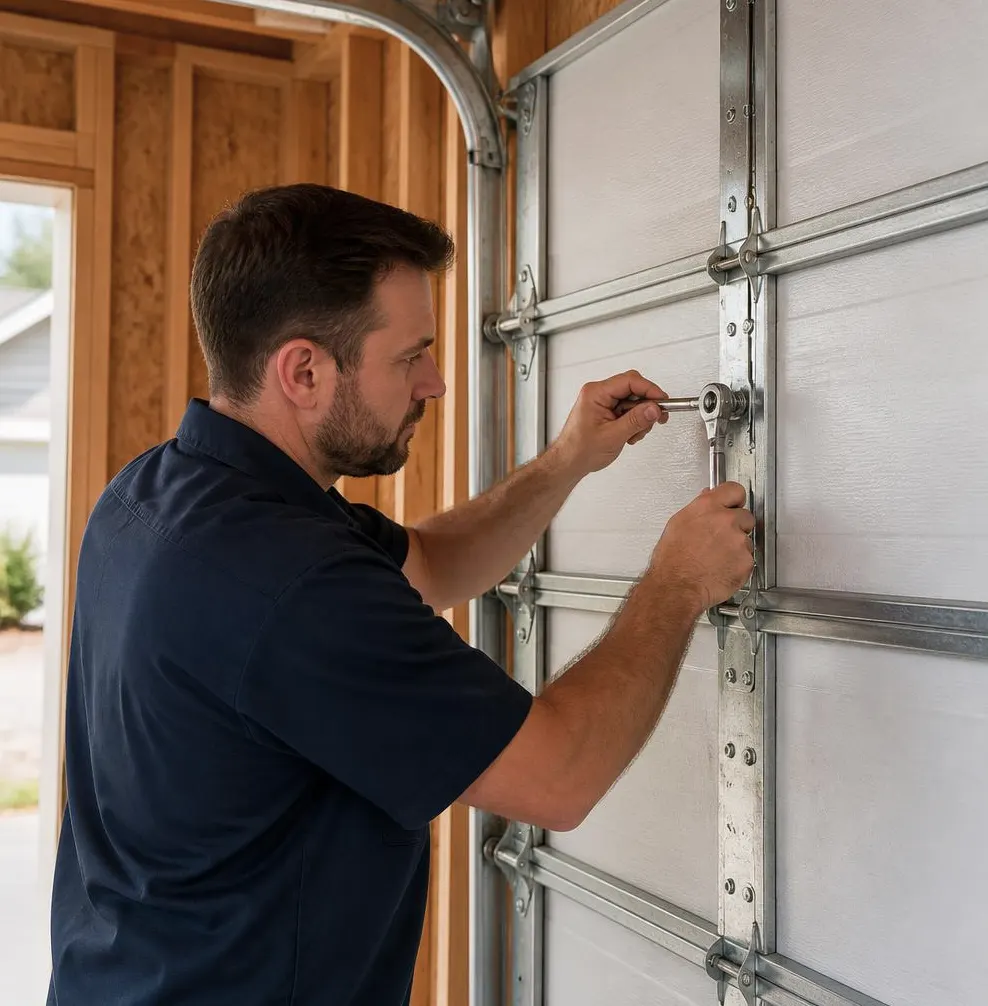
- Hardware: checked first because it's the easiest fix. Nuts, bolts, and hinge screws work loose over thousands of open-close cycles and seasonal expansion and contraction. Fix: a full tightening pass with a wrench or socket set, section by section.
- Rollers and track gap: worn rollers that no longer fit snugly in the track rattle as the door moves. Fix: roller replacement, same as above.
- Opener chain or belt tension: a loose chain-drive opener rattles against the rail. Fix: adjust chain tension per the opener's manual, or inspect the belt for wear if it's a belt-drive unit.
Why This Matters Before Winter
Brownsburg's seasonal swing from humid summer into cold, icy winter is tough on garage doors. Moisture and heat work hardware loose over the summer, then cold temperatures stiffen lubricant and make metal more brittle right when ice, snow, and road salt start getting tracked into the garage. A noise that's easy to ignore in October can turn into a stuck door or a broken spring on a sub-freezing morning in January. Catching grinding, squealing, popping, or rattling now — before the real cold sets in — is the cheaper and safer path.
When to Call Brownsburg Garage Door Experts
If you're hearing a loud pop or bang, stop using the door and call us — that's almost always a spring issue, and our Spring Replacement service handles it safely with the right tools and matched springs so both sides wear evenly going forward. For grinding, squealing, or rattling that doesn't clear up with a basic lubrication, our Garage Door Maintenance visit covers a full inspection of rollers, hinges, tracks, cables, and opener hardware, tightening and replacing worn parts before they fail on a cold morning. We serve Brownsburg, Avon, Plainfield, Danville, Pittsboro, Zionsville, Lizton, and Clayton, and we show up on time and treat your garage like it's our own.
If your garage door is making noise it didn't used to make, don't wait for winter to find out why. Call Brownsburg Garage Door Experts today and get it checked out before the cold sets in.